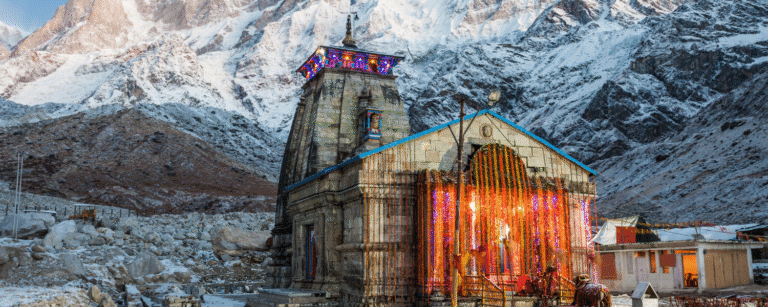
The Char Dham, Kedarnath–Badrinath, Gangotri, Yamunotri Tour starting from Rishikesh is a spiritually enriching journey through the majestic Garhwal Himalayas of Uttarakhand. Rishikesh, known as the Yoga Capital of the World, serves as the perfect gateway for the sacred Char Dham pilgrimage.
From Rishikesh, travellers begin their journey along the banks of the holy Ganga, passing through scenic hill towns like Devprayag, Rudraprayag, and Joshimath.
The first major destination is Kedarnath, one of the twelve Jyotirlingas of Lord Shiva. Nestled at an altitude of 3,583 meters, the Kedarnath Temple is surrounded by snow-clad peaks and offers a deeply spiritual atmosphere. Pilgrims undertake a trek from Gaurikund, making the experience both challenging and rewarding.
After Kedarnath, the journey continues toward Badrinath, the revered abode of Lord Vishnu. Located on the banks of the Alaknanda River, Badrinath Temple is known for its colourful architecture and serene surroundings. En route, travellers witness breathtaking landscapes, waterfalls, and sacred confluences.
Guide to Char Dham Yatra Booking: Tips & Insights
Embarking on the Char Dham Yatra is a spiritual journey that rejuvenates the soul. Discover essential tips and insights for hassle-free booking and an unforgettable experience!
Significance of Char Dham Yatra
The Char Dham Yatra holds immense significance in Hinduism and is considered one of the most revered pilgrimages. The term “Char Dham” refers to four sacred sites—Yamunotri, Gangotri, Kedarnath, and Badrinath—situated in the picturesque state of Uttarakhand, India. These holy shrines are nestled in the lap of the majestic Himalayas, each embodying a unique aspect of divinity and spirituality. Pilgrims believe that undertaking this yatra washes away their sins and grants them salvation.
Yamunotri, the source of the Yamuna River, is the first stop of the Char Dham Yatra. It is dedicated to Goddess Yamuna, sister of Yama, the god of death. The temple is a symbol of purity and devotion, and its thermal springs are believed to have healing properties. Next comes Gangotri, where the holy Ganges river originates. The Gangotri Temple is dedicated to Goddess Ganga, and it is said that King Bhagirath performed rigorous penance here to bring the river from heaven to earth.
Kedarnath, one of the twelve Jyotirlingas of Lord Shiva, is the third stop. It is situated near the Mandakini River and is known for its ancient stone temple. The final destination is Badrinath, dedicated to Lord Vishnu. The Badrinath Temple, located on the banks of the Alaknanda River, attracts devotees who seek blessings from Lord Badri, an incarnation of Vishnu. Together, these four sites form a circuit of immense religious importance, attracting thousands of pilgrims each year.
Best Time to Undertake the Char Dham Yatra
Timing is crucial for the Char Dham Yatra, as the weather in the Himalayas can be unpredictable and harsh. The best time to undertake this pilgrimage is between late April and early November. During this period, the temples are accessible, and the weather is relatively favourable. The yatra generally opens in the last week of April or the first week of May, depending on the auspicious Akshaya Tritiya, and closes around Diwali in November.
The summer months, from May to June, are considered the most suitable for the yatra. The weather is pleasant, and the roads are usually clear of snow, making travel easier. However, this is also the peak season, so expect larger crowds and higher prices for accommodations and services. If you prefer a quieter experience, consider planning your trip in the pre-monsoon period of late April or early May.
Monsoon season, from July to September, poses significant challenges due to heavy rainfall, landslides, and flooding. It is advisable to avoid the yatra during this time for safety reasons. The post-monsoon period, from late September to early November, is another excellent time for the pilgrimage. The weather is cool and crisp, the landscape is lush and green, and the crowds are thinner compared to the summer months. Regardless of when you choose to go, always check the local weather forecast and road conditions before embarking on your journey.